


An individual from Poland who claimed to be Madeleine McCann "pursued that myth" and harassed the missing girl's parents by dispatching electronic messages, placing telephone calls and appearing at their address, a trial was told.
Karen Spragg and Julia Wandelt conducted a "systematic intimidation", Leicester Crown Court heard, and in one defendant's situation, that lasted for thirty months.
At the trial's commencement, jurors were told the defendant consistently asserted she was the missing child and was taken and transported to Poland.
Ms Spragg and the second accused each contest a charge of harassment resulting in serious alarm and anxiety to Madeleine's parents between mid-2022 and early this year.

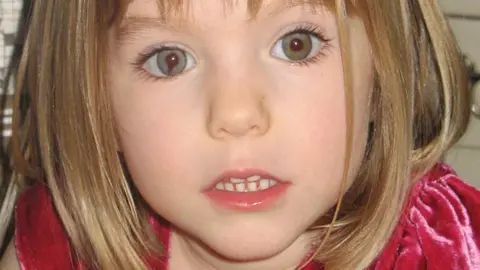
Madeleine's disappearance in the year 2007 - at the three years old during a family holiday in Portugal - is among the most widely reported missing child cases and remains unsolved.
Legal counsel also mentioned the global attention that Madeleine's case had directed toward the parents.
"Among numerous tragic consequences for the McCann family has been their ongoing struggle to escape the glare of media attention that came with that tragedy.
"The focus they have received has sometimes lacked compassionate, sometimes far from it.
"There continues to exist a number of people who persist in refusing to recognize their situation and perpetuate conspiracy theories.
"Unfortunately, these accused individuals fall into that second category."
Escalating Behavior
The court heard from mid-2022, Ms Wandelt had begun to speak to "anyone who would care to listen" that she was Madeleine.
Legal authorities said that, in January 2023, the accused was in contact with a Polish charity created to help with historic missing persons cases and provide assistance and advice to people seeking those who had disappeared.
According to court testimony, Ms Wandelt first claimed she was missing German girl Inga Gehricke.
But after these assertions were dismissed by the charity, the accused then reached out to the charity with a belief she could be Acacia Bishop - a missing baby from Utah in the US - before messaging them about her insistence she was the British missing child.
'Did Not Deter'
Her belief progressed to an effort to contact the medical facility where the parents were employed.
A lengthy telephone conversation to the switchboard resulted in a report back from the health service representative to the investigation team, the UK inquiry into the disappearance.
The jury was told Ms Wandelt made additional efforts to reach out to officials and then the father personally through electronic mail in June 2023.
In one email, she wrote: "I could be your daughter, it's possible I am the missing girl."
She added people were "attempting to conceal the case" and claimed there were resemblances between her and Madeleine, including having scars in the same places.
But her efforts went without response, which court officials said "did not deter" Ms Wendelt - who then made contact with the family's other daughter the sibling via social media.
Informing her she was her "only hope", she sent altered photographs to show they were "possibly connected" and claimed to have recollections of events prior to disappearance, the court heard.
These claims, the court heard, were restated in this year when the defendant is alleged to have "consistently" messaged the mother's mobile over the span of 24 hours - calling her "mother", asserting memory of feeding Madeleine's younger brother Sean, of engaging in ring a roses in the back garden of the residence in the Leicestershire village, Leicestershire, and of the night the disappearance occurred.
In one message, she said: "I recall you visited my room before the abduction, touched my hair and said 'I love you and I will find you'."
The trial of the first defendant, of Jana Kochanowskiego in Lubin, the country, and the second defendant, of a location in Cardiff, continues.


